
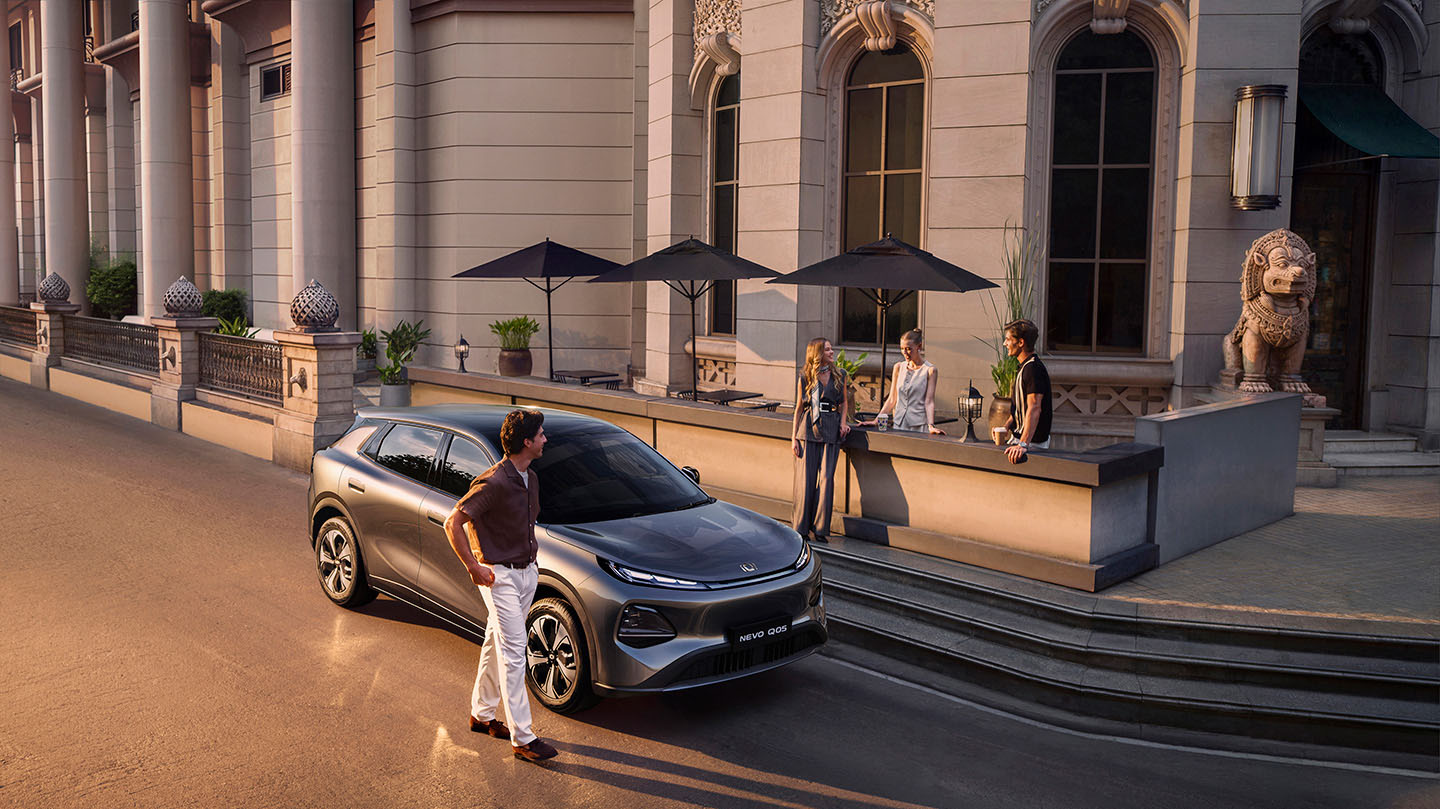
Estimate usable NEVO Q05 range from the buyer’s real routes, climate and charging access. Keep the official NEDC figure separate from measured consumption, preserve an arrival reserve and verify the battery and vehicle version behind every result.
Build a realistic range plan
Begin with the buyer's longest normal day and least convenient recurring trip. Divide urban, mixed and motorway kilometres, then add elevation, seasonal temperature, passenger load and climate-control use. Keep the official NEDC figure labelled as NEDC and do not silently convert it to WLTP or a road estimate. Use the Q05 charging guide to map where energy can actually be recovered. For cold destinations, build a winter route and charging-reserve plan instead of applying one fixed reduction to the brochure figure.
Label every range number by source and test conditions so brochure, dashboard and measured values are never presented as equivalents.
Collect comparable road evidence
Treat battery condition as one input to the range calculation rather than trying to infer it from displayed range. Record a controlled route at known ambient temperature and starting state of charge. Note distance, average speed, elevation, climate setting, energy use shown by the vehicle, ending state of charge and any charging added. Repeatability matters more than one favourable dashboard prediction.
Save the route log with the VIN, temperature and state-of-charge data; a result without those inputs cannot be reproduced.
Map usable destination charging
Test the route plan against charging that the buyer can actually use at the destination. Include a reserve on arrival, an alternative charger and slower winter or high-speed scenarios. Where home charging is unavailable, public-network reliability and payment access can matter more than the longest possible test-cycle figure.
Record the primary charger, backup charger and minimum arrival reserve before the vehicle is approved.
Calculate energy and charging cost
Put home, workplace and public charging on the same cost basis. Compare energy cost per 100 km using local tariffs, but include wallbox installation, public rapid-charging premiums and time spent charging. Review battery-health evidence before attributing unexpectedly short range to normal driving conditions.
State the tariff date and charging assumptions because public charging prices and access conditions can change.
Test one candidate against the route
Create three route cases with the actual buyer: ordinary weekday, longest regular trip and an adverse-weather or high-speed case. For each, record distance, elevation, expected temperature, passengers, luggage, climate use, available chargers and the reserve required at arrival. On a candidate road test, note starting and ending state of charge, displayed consumption, average speed and charging added; do not extrapolate an unusually short urban drive to motorway use. If no local candidate can be tested, keep the result as a planning range rather than a promise. Recalculate after purchase using several complete trips, because the first dashboard estimate reflects limited history. A conservative route plan that works without using the last few percent of charge is more useful than the largest brochure number. Continue with the Q05 tyre, wheel and alignment checks when this issue changes the decision.
Use the completed route cases to approve, pause or reject this specific vehicle rather than promising a universal distance.
Record the approval decision
Approve the range plan only when the exact BEV variant, route conditions and measured or clearly qualified energy evidence are documented. The destination must have usable charging and a stated arrival reserve, while the cost model must identify its tariff date. If any conclusion depends on converting NEDC into an assumed road range, keep the vehicle on hold until route-based evidence is available.
Retain the approval with the VIN file and reopen the review whenever the candidate, destination or commercial boundary changes.
Buyer approval checklist
Use these fields as a candidate-specific decision record. Assign each unresolved item before approving payment or shipment.
- Exact BEV variant
- Route and climate
- Measured energy use
- Charging access
- Arrival reserve
- Energy cost
Primary references
Official Changan Thailand NEVO Q05 page ↗Official NEVO Q05 specification sheet ↗Changan NEVO Q05 Real-World Range and Efficiency: buyer questions
Is 462 km the real-world NEVO Q05 range?
No. It is the official Thailand-market NEDC figure. Real use varies with route, speed, temperature, payload, climate loads, tyres and battery condition.
How should an import buyer estimate usable range?
Model actual routes, retain an arrival reserve, map dependable chargers and validate the plan with documented candidate or owner consumption where available.
Does fast charging increase driving range?
It changes how quickly energy can be added, not the energy the battery stores. Route convenience depends on compatible, reliable chargers and the vehicle charge curve.